


DIVIDI will support education by offering post-graduate fellowships and graduate internships for emerging professionals that share our exemplary practice and excellence values. These positions will have a speciality in technical art history and technical imaging.
Through our interdisciplinary network, fellows and interns will gain hands-on experience in technical image acquisition and data processing, as well as the interpretation and publication of those results.
Fellows and interns - which might have a background in restoration, art history and/or science - will study the obtained technical images and artworks to present a detailed report on the findings and digital documentation.
Research outcomes are maintained on the DIVIDI Foundation website, subject to partners permission. The website grants access to information and images in a standardized and systematic format, developed by fellows of the foundation in accordance with academic norms. Further, fellows and interns will work in close collaboration with skilled and experienced conservators at Studio Redivivus.
DIVIDI will seek to organize conferences, symposia and expert meetings in the area of art research and technical imaging.
CURRENT RESEARCH
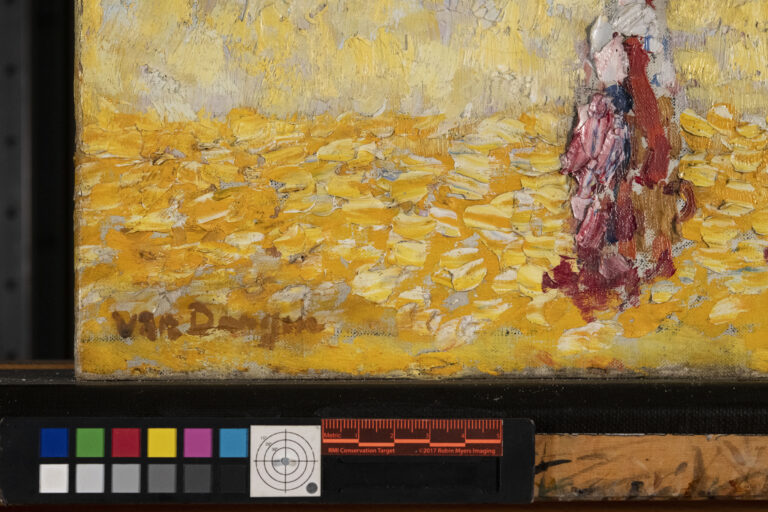
Van Dongen and the Avant-Garde: Painter of Touch and Colour
Supported by a NICAS Small Project Grant, this collaborative project examines Kees van Dongen’s painting techniques, materials, and artistic development during his early avant-garde years, circa 1895–1913.
Led by art historian Anita Hopmans, the project brings together archival and visual research with the technical examination of eleven paintings from Dutch museum collections and private holdings. Stichting DIVIDI participates alongside museum and research partners to investigate Van Dongen’s working methods and material choices.
Technical examination is revealing new insights into his preparatory practice and evidence of reworking in several paintings. The current phase focuses on elemental analysis across the group to further characterize his materials.